Mobile Application · Concept
Lettuce
01
Overview
How might we motivate people to create meal plans — and keep them committed — to eliminate food waste at home?
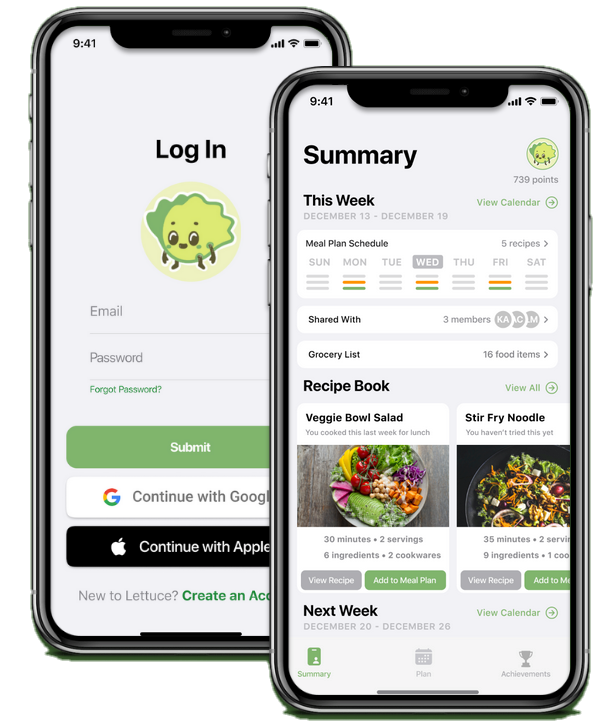
Adults were struggling to create and commit to meal plans, which led to food waste within their households. Lettuce aimed to solve this through a mobile app that helps people meal plan, easily build grocery lists, and stay motivated to follow through.
The impact: users feel empowered to plan and shop appropriately — reducing the amount of food thrown away each week.
02
Research
To gain insight into people's eating and cooking habits, we conducted 10 one-on-one interviews and surveyed nearly 50 individuals. Our findings shaped how we approached the user persona.
- People are aware food waste is happening in their households
- The biggest contributing factor was poor meal planning
- Less than half of those surveyed wanted an app that directly addresses food waste
- 40–50% of food waste happens at the consumer level
03
User persona
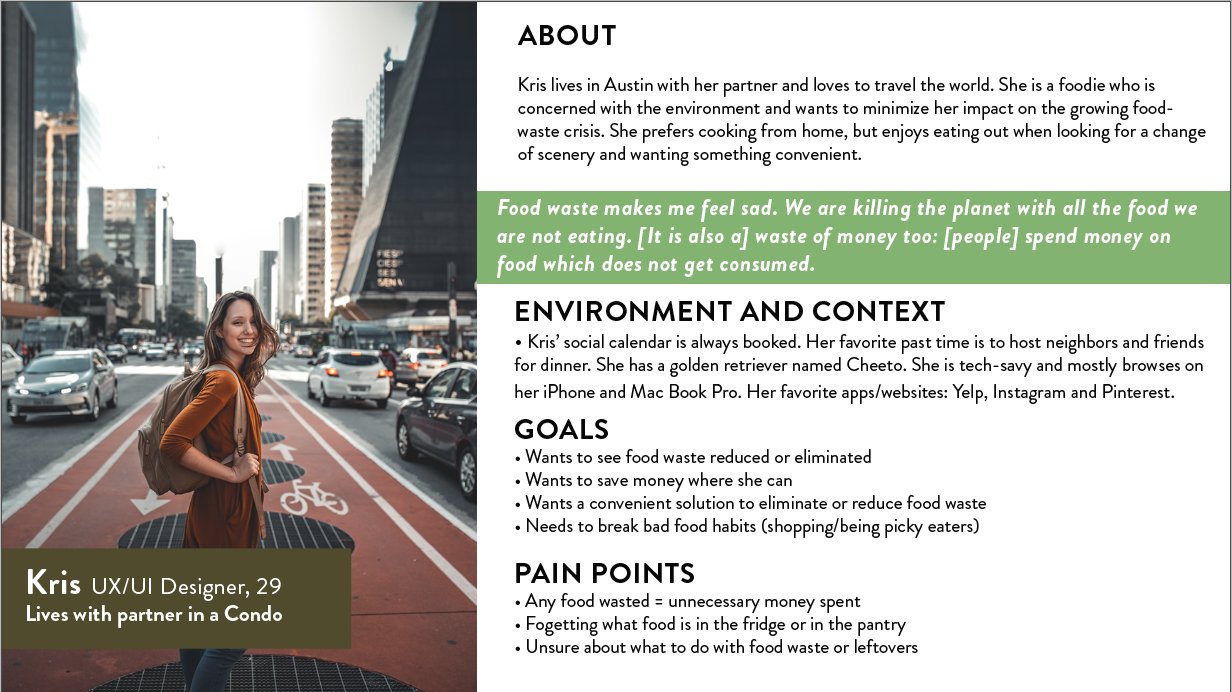
Adults need more effective and engaging ways to prepare and stick to meal plans — because impromptu grocery shopping leads to food waste.
Our research challenged some early assumptions. We had assumed the user would be in their early 20s, possibly in college, and that money would be the key motivator. Neither held up. Our actual user is environmentally conscious, cooks at home regularly, and is motivated by reducing waste — not just saving money.
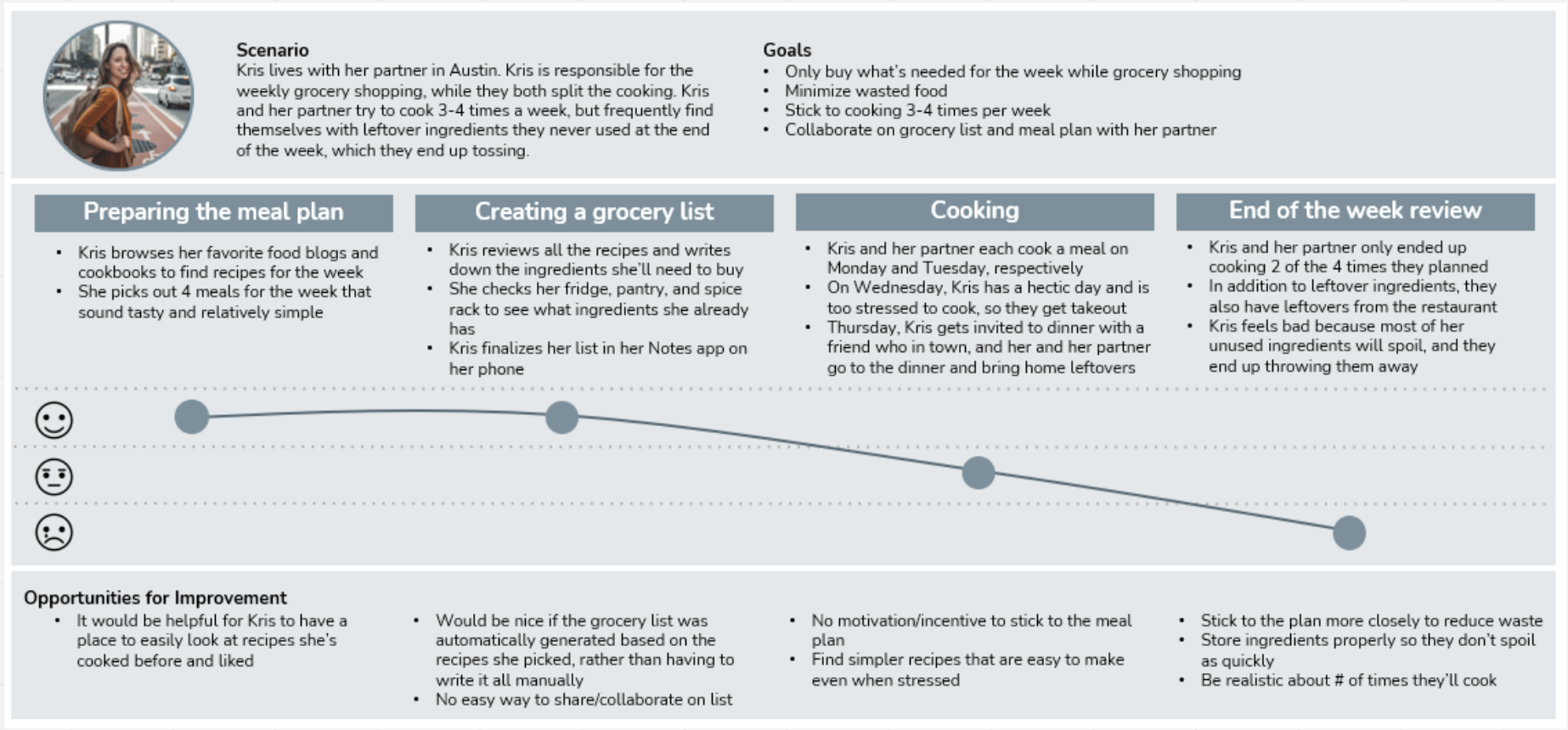
Current-state journey map
04
Design process
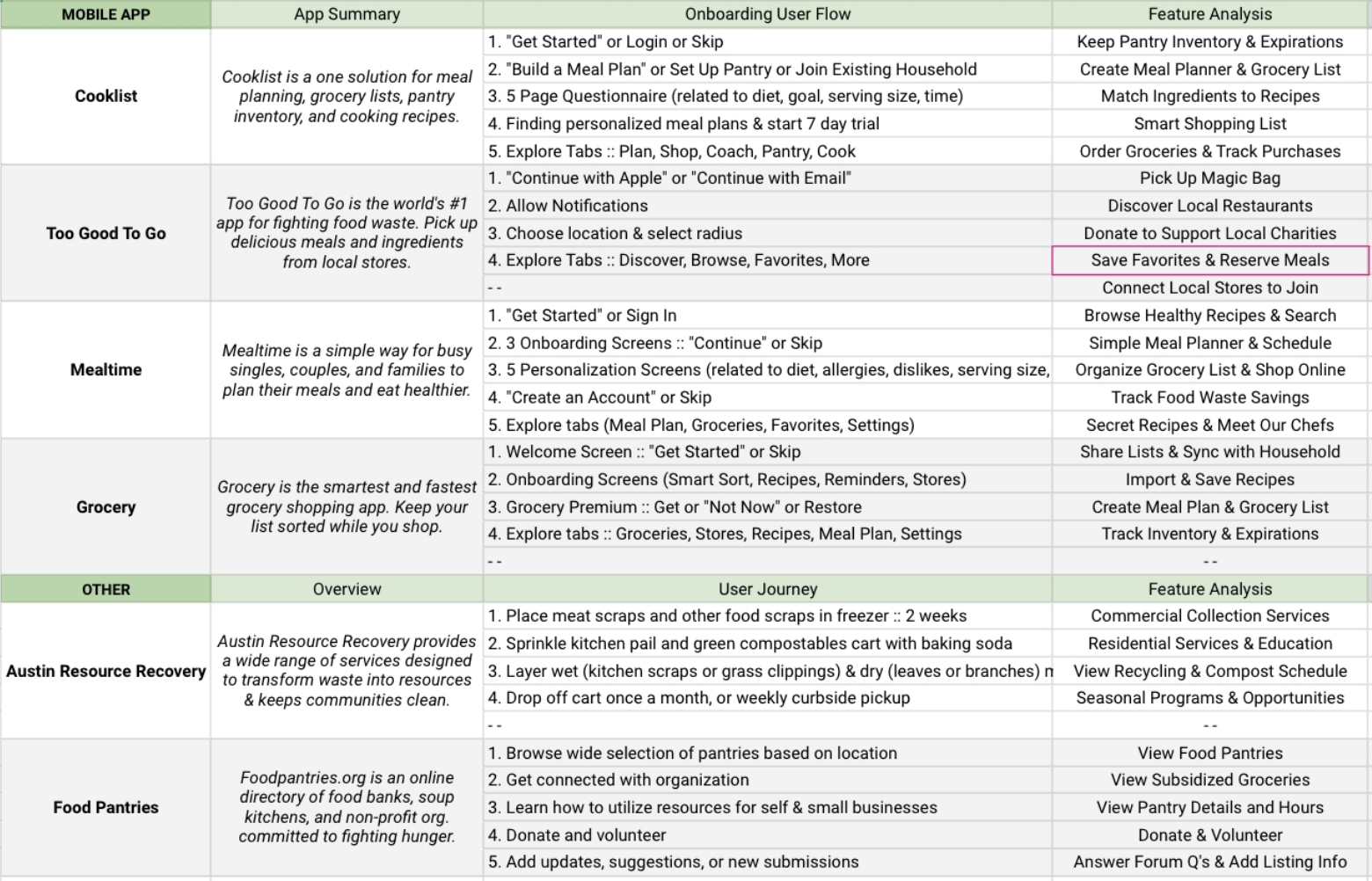
After a competitor analysis, I Like / I Wish / What If brainstorm, and a feature prioritization matrix, three features rose to the top: meal planning with auto-generated grocery lists, collaboration with household members, and a motivation and rewards system for sticking to the plan.
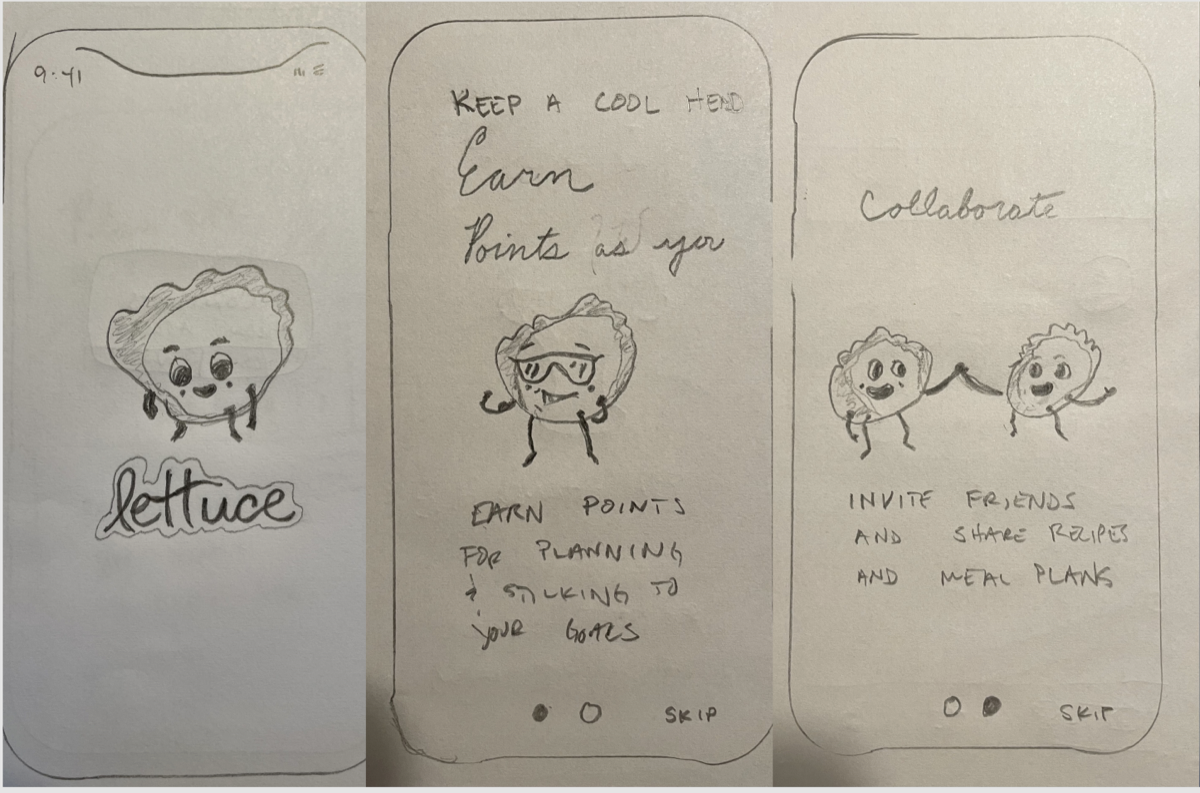
We hand-drew low-fidelity wireframes and built out four tasks for usability testing — nine remote sessions and two in-person guerrilla tests at a nearby coffee shop. Testers found the overall tasks intuitive and simple to complete, though the user flow order for meal planning and the point system needed revision.
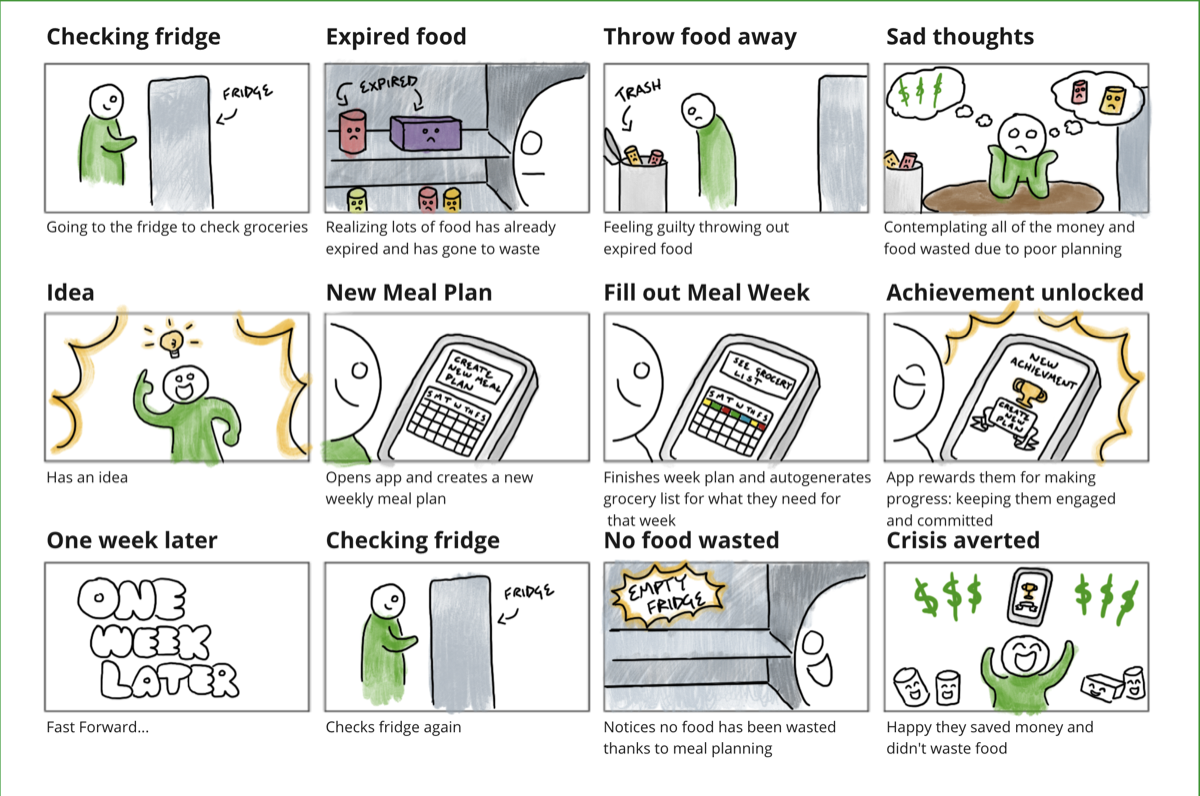
Lo-fi wireframes
05
Results
In three weeks, we created, researched, designed, and prototyped a mobile app from scratch. Final testing surfaced two opportunities for future iterations: a pantry inventory feature and a more developed "Garden Growing" rewards concept that didn't get fully fleshed out due to time constraints.
Start with a problem, not a solution.
Our team struggled early by jumping to solutions before research. Letting the problem define the solution — not the other way around — was the most valuable lesson of the sprint.
Back to work